
Engaging bedtime stories for toddlers are defined by three elements: personalization, calm pacing, and simple interaction. The goal is not literary complexity. The goal is a predictable, calming ritual that signals the brain to prepare for sleep. Research confirms that the ideal session runs 5–10 minutes with one focused story, keeping stimulation low and comfort high. Parents who understand this shift from entertainer to sleep guide see faster cooperation and less bedtime resistance. This article gives you the specific techniques to make that shift tonight.
How to make bedtime stories engaging for toddlers through personalization
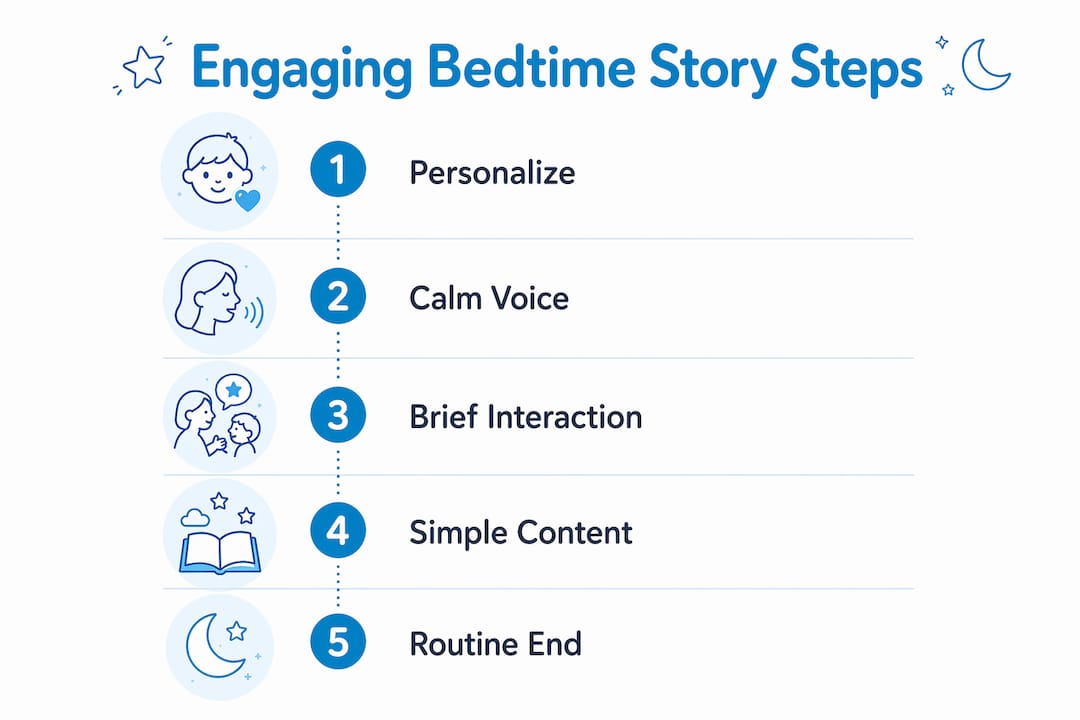
Personalization is the single most effective tool for capturing a toddler’s attention at bedtime. When your child hears their own name in a story, the narrative stops being abstract. It becomes about them. That shift in perspective transforms a generic tale into something a toddler connects with immediately.
The simplest way to personalize is to swap the main character’s name for your child’s name. Beyond that, you can weave in their favorite animal, a beloved toy, or a theme they talk about constantly. A child obsessed with dinosaurs will stay far more focused on a story where a small dinosaur named after them goes to sleep in a cozy cave than on any off-the-shelf tale.
Personalization also reduces bedtime resistance. When children feel seen in a story, they stop fighting the routine and start leaning into it. Dreamseedbooks builds this principle into every book it creates, incorporating the child’s name, appearance, and favorite themes into a custom 20-plus page illustrated story. The result is a book that feels written specifically for your child because it was.
- Use your child’s first name as the hero’s name every time.
- Reference a real object they love, such as a stuffed animal or a blanket.
- Set the story in a familiar place, like their bedroom or backyard.
- Mirror their day by including one activity they did that afternoon.
- Keep the character’s challenge small and instantly relatable, like finding a cozy spot to sleep.
Pro Tip: Write a two-sentence “story seed” on a notepad before bedtime. Jot down your child’s name and one thing they loved that day. That seed becomes the spine of a spontaneous personalized story that takes under a minute to prepare.
What voice and pacing techniques work best for calming toddlers?
Your voice is the most powerful tool in your storytelling kit. A calm, rhythmic delivery with gradually quieter tones toward the end of the story promotes sleep readiness far more effectively than an animated, expressive performance. Many parents instinctively raise their energy to hold a toddler’s attention. That instinct works at the playground. At bedtime, it backfires.
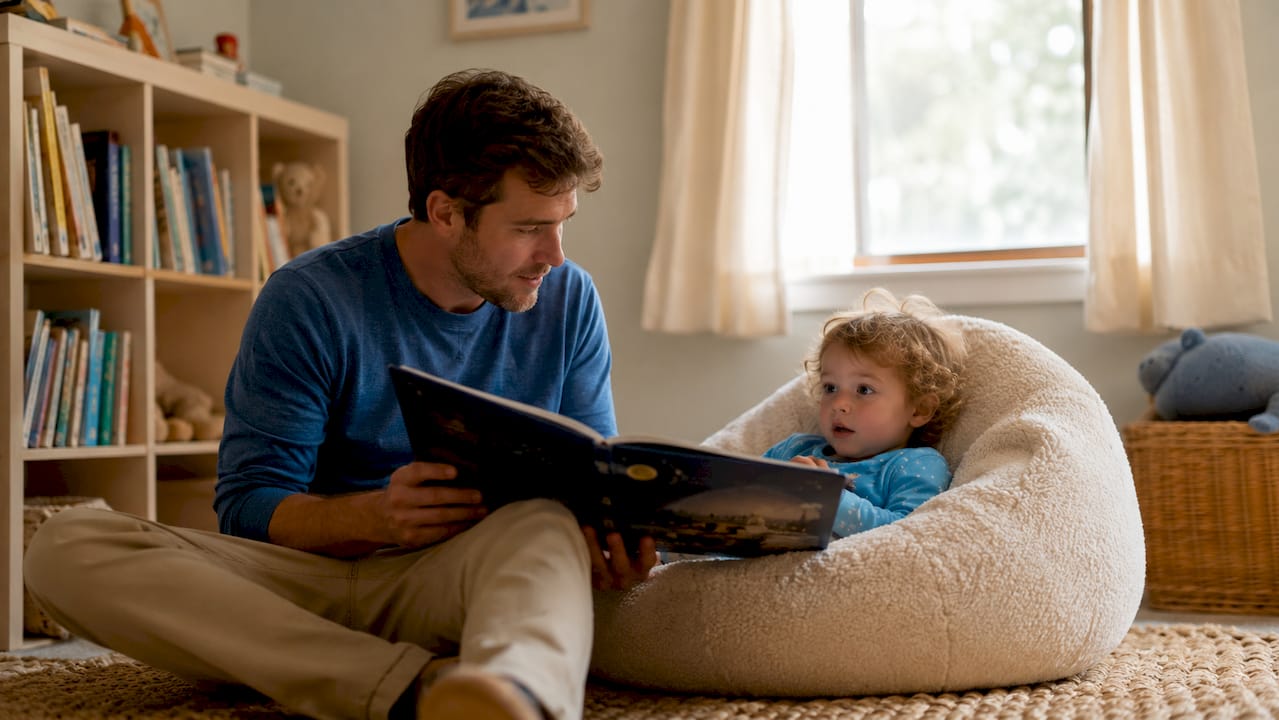
Overly dramatic reading overstimulates the nervous system. Toddlers who are excited cannot fall asleep easily. The goal is the opposite of a performance. Think of your voice as a slow tide coming in, steady and predictable, getting quieter with each wave.
Rhythm and repetition are your allies here. Phrases that repeat across a story act as physiological regulators, giving the brain a pattern to follow and relax into. A line like “and then the little bear yawned, and the stars grew bright” repeated three times across a story does more sleep work than any plot twist.
“The story acts as a physiological regulator, signaling the brain to prepare for sleep. Rhythmic repetition is not a literary device at bedtime. It is a biological one.”
Practical voice techniques to use tonight:
- Start at your normal speaking volume, then drop it by 20% halfway through.
- Slow your words per minute as the story moves toward its ending.
- Pause briefly after repeated phrases to let the rhythm land.
- Avoid character voices that require high pitch or sudden loudness.
- End every story with the same closing line each night to anchor the ritual.
On nights when you are too tired to read aloud, non-screen audio stories with calm, repetitive narration serve as a reliable backup without overstimulating your child.
How does interactive storytelling for toddlers work without disrupting calm?
Interactive storytelling for toddlers works best when you give choices, not open-ended questions. Open questions like “What do you think happens next?” can send a toddler’s imagination into overdrive right before sleep. Structured choices keep them engaged while keeping the energy low.
Offering 2–3 story options or simple interactive actions gives toddlers a sense of agency. That agency reduces the power struggle that makes bedtime hard. When a child feels they helped choose the story, they are far more likely to cooperate with the routine.
- Offer two-story choices before you begin: “Do you want the bunny story or the cloud story tonight?”
- Ask your child to turn the page at calm moments, giving them a physical role without raising excitement.
- Invite them to whisper a repeated phrase with you, like “and then it was time to sleep.”
- Let them choose one detail, such as what color the main character’s blanket is.
- End with a simple question they answer with their eyes closed: “What color is the sky in your dream?”
The key is keeping every interactive moment brief and low-energy. Each choice or action should pull the child deeper into calm, not pull them out of it.
Pro Tip: Limit interaction to two moments per story. One at the start to build buy-in, and one near the end to close the loop. More than two interactive beats can shift the mood from sleepy to playful.
What story content actually helps toddlers wind down?
Story content for bedtime follows a different set of rules than daytime reading. The ideal toddler bedtime story avoids villains, tension, and cliffhangers entirely. A story that ends on an unresolved note keeps a toddler’s mind active long after the lights go out.
The best content mirrors familiar bedtime routines. A character who brushes their teeth, puts on pajamas, and finds a cozy spot to sleep gives your child a narrative map of what is about to happen to them. That familiarity is calming, not boring. Toddlers find comfort in predictability.
Sensory language also helps. Describing soft blankets, warm light, and quiet sounds activates the body’s relaxation response. Short, simple sentences with gentle imagery do more sleep work than elaborate descriptions.
| Story element | Sleep-supporting version | Version to avoid |
|---|---|---|
| Conflict | Character loses a toy and finds it nearby | Character faces a scary monster or villain |
| Ending | Character falls peacefully asleep | Cliffhanger or unresolved problem |
| Pacing | Slow, repetitive, predictable | Fast-moving with surprise twists |
| Language | Soft sensory words: warm, cozy, quiet | Exciting action words: crash, race, explode |
| Length | One story, 5–10 minutes | Multiple stories or extended reading |
Even when toddlers appear distracted or fidgety, the ambient rhythm of storytelling still regulates their nervous system. You do not need perfect attention to get the sleep benefit. The sound and pattern of the story do the work regardless.
A personalized bedtime storybook built around these principles, with calm pacing, gentle themes, and your child’s name woven throughout, removes the guesswork from content selection entirely.
Key Takeaways
The most effective way to make bedtime stories engaging for toddlers combines personalization, a calm rhythmic voice, and two structured interactive moments per session.
| Point | Details |
|---|---|
| Personalization drives engagement | Use your child’s name, favorite themes, and familiar settings to make stories feel personal. |
| Voice pacing promotes sleep | Start calm, slow down gradually, and end quietly to signal the brain that sleep is near. |
| Limited choices reduce resistance | Offer 2–3 options before the story starts to give toddlers agency without raising energy. |
| Story content should mirror bedtime | Choose plots with gentle routines, no villains, and a peaceful ending every time. |
| Fidgeting does not mean failure | Toddlers absorb rhythmic storytelling even when they seem distracted, so stay consistent. |
Why I stopped trying to be a great storyteller at bedtime
Most parenting advice about bedtime stories focuses on performance. Use different voices. Make it dramatic. Keep them hooked. I spent months doing exactly that, and my toddler was wired at 9 p.m. every night.
The shift happened when I stopped trying to entertain and started trying to bore them into sleep. Not boring in a bad way. Boring in the way a slow river is boring: predictable, steady, and deeply calming. I dropped the character voices. I slowed my pace. I repeated the same closing line every single night. Within two weeks, that closing line alone was enough to make my child’s eyes heavy.
The other thing nobody tells you is that toddlers do not need a new story every night. They want the same story. Repetition is not a failure of creativity. It is exactly what their developing brains crave. A story they have heard ten times is a story that feels safe.
If you are exhausted and out of ideas, that is not a parenting failure. It is a signal to simplify. One name, one familiar place, one gentle problem solved by sleep. That is the whole formula. You do not need to write a novel. You need to write a lullaby.
— Standley
Dreamseedbooks: personalized stories built for bedtime
Every technique in this article works better when the story itself is built around your child from the start.

Dreamseedbooks creates custom 20-plus page illustrated storybooks that incorporate your child’s name, appearance, and favorite themes into a calming narrative designed for ages 3–8. Each book is reviewed by a real person before delivery, so the personalization is accurate and the story flows naturally. You can make your child the hero of a story built around the exact calm, repetitive structure that supports sleep. Dreamseedbooks also offers a full collection of personalized storybooks for different ages, themes, and occasions, all delivered digitally within 24 hours.
FAQ
How long should a toddler bedtime story be?
The ideal length is 5–10 minutes with one story per session. More than one story raises stimulation and delays sleep onset.
Does my toddler need to sit still to benefit from a bedtime story?
No. Toddlers absorb storytelling through ambient sound and rhythm even when they fidget. Consistent storytelling still regulates their nervous system.
What makes a bedtime story different from a daytime story?
A bedtime story prioritizes calm pacing, repetition, and a peaceful ending over plot or excitement. It functions as a sleep cue, not entertainment.
How do I stop my toddler from asking for more stories?
Use the same closing line every night and treat it as a firm signal that storytime is over. Toddlers respond well to predictable rituals, and a consistent ending phrase becomes a sleep trigger over time.
Can personalized books really help with bedtime resistance?
Yes. Personalization reduces resistance by making children feel seen and invested in the story. When a toddler hears their own name, they engage willingly rather than fight the routine.