
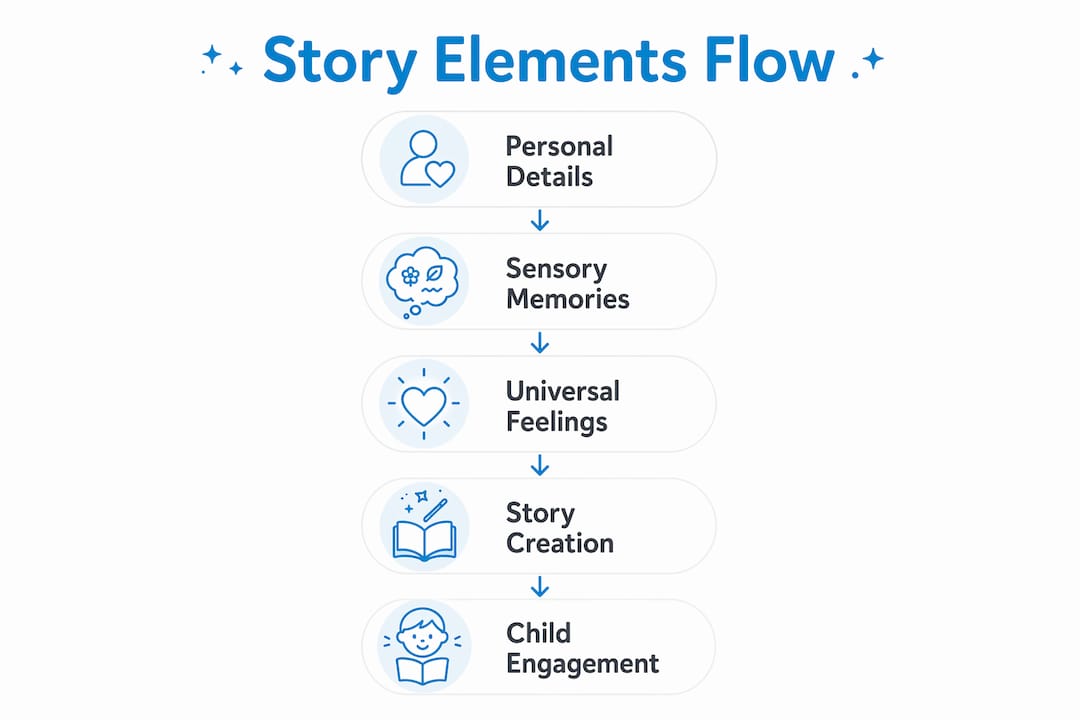
Personalized storytelling is defined as the practice of weaving a child’s own name, experiences, and sensory memories directly into a narrative to create emotional relevance. Understanding how child details become story elements is the foundation of every engaging book written for children aged 3–8. Autobiographical memory used as a narrative strategy constructs the child as an active agent in the story, building both self-identity and a deeper connection to reading. The result is not just a story a child hears. It is a story a child lives.
Which child details make the most effective story elements?
The most powerful story elements come from the details children already carry with them every day. A child’s name is the single strongest emotional anchor in any narrative. Personalized details like a child’s name and developmental milestones raise engagement by making stories feel immediately relevant, especially for children who resist reading. That relevance is not a nice bonus. It is the mechanism that keeps a 4-year-old asking for one more page.
Beyond names, the richest material comes from three categories:
- Relationships. Real friends, siblings, and pets become supporting characters. A child named Maya who has a best friend called Leo will lean in the moment Leo appears on page three.
- Developmental milestones. Learning to ride a bike, losing a first tooth, or starting kindergarten are universal experiences with deeply personal textures. They give the plot stakes the child already understands.
- Daily routines. Mundane sensory details such as how a character eats breakfast or brushes their teeth ground a story in authentic lived experience rather than a generic template.
Pro Tip: Ask the child to describe their morning routine in three words before you write. Those three words will give you more story material than an hour of brainstorming.
The goal is specificity. “A girl who loves dogs” is a character sketch. “A girl named Sofia who feeds her beagle, Biscuit, exactly four kibbles every morning” is a story waiting to happen.
How do sensory details from childhood memories enhance storytelling?
Sensory details transform abstract character traits into concrete, lived experiences. Sensory details from childhood memories convert vague concepts into scenes a child can see, hear, and feel. That conversion is what separates a story a child tolerates from one they request every night.
The five senses each carry distinct narrative weight:
- Sight. The color of a child’s favorite backpack or the shape of their bedroom window creates instant visual recognition.
- Sound. The specific noise of a school hallway, a parent’s laugh, or a pet’s bark places the child inside the scene.
- Smell. Grandma’s kitchen or a freshly opened crayon box triggers memory faster than any visual description.
- Taste. A character who loves peanut butter toast at exactly 7 a.m. is a character a child trusts.
- Touch. The scratch of a wool sweater or the cold of a tile floor in winter makes a scene physical and real.
“The most vivid stories are not invented. They are excavated from the specific, ordinary moments children live every single day.”
Mining sensory memories does not require dramatic events. A child’s favorite meal, the sound of rain on their bedroom window, or the feeling of sand between their toes at the beach are all story-grade material. Recognition in story characters supports emotional literacy and developmental pacing. When a child sees their own sensory world reflected in a book, they feel validated and less alone. That emotional payoff is what builds lifelong readers.
What storytelling techniques encourage children to contribute their personal details?
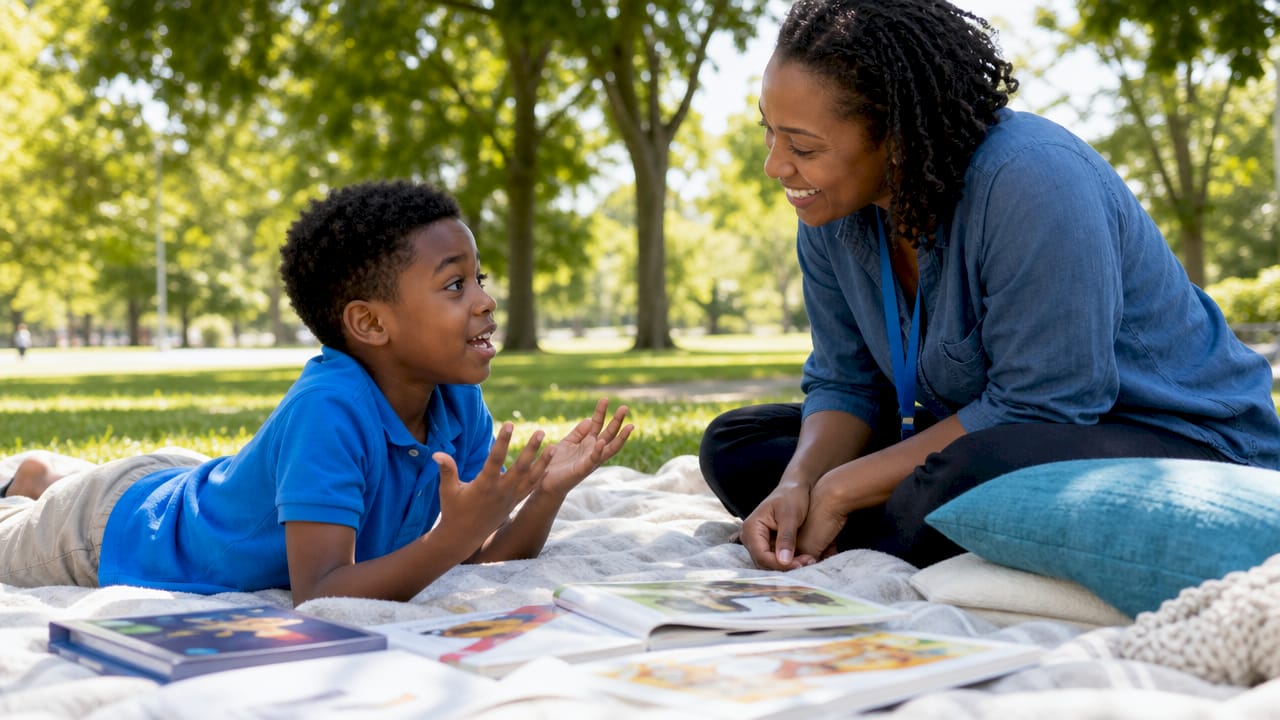
Children contribute their best material when adults stop correcting and start listening. The technique that consistently unlocks authentic detail is the open-ended prompt. Asking “What happens next?” without correction positions the adult as a recipient of the child’s story, not a judge of it. This approach is especially effective for children who are reluctant to share because they fear getting the “wrong” answer.
Here are four techniques that work reliably for parents and educators:
- Open-ended prompts. Start with “What happens next?” or “What does your character do when they’re scared?” These questions have no wrong answer. They signal to the child that their ideas have value exactly as they are.
- Co-creation without correction. Sit beside the child and build the story together. If they say the dragon eats pizza, the dragon eats pizza. Judgment shuts down contribution faster than anything else.
- Drawing before writing. Drawing characters and settings before writing helps children bypass blank page paralysis. Visual anchors create a concrete backstory that translates naturally into words. A child who draws their character’s face already knows what that character is feeling.
- Peer storytelling. Invite children to tell stories to each other, not just to adults. Peer audiences reduce performance anxiety and encourage children to include personal details they might censor for a grown-up listener.
Pro Tip: Record the child telling their story out loud before writing anything down. Children speak in vivid, specific language that often disappears the moment a pen comes out.
The co-creation model is particularly powerful in classroom settings. When educators treat children as co-authors rather than subjects, the stories produced are richer, more specific, and far more emotionally resonant. Storytelling aids children in processing complex issues safely, building confidence and emotional literacy at the same time.
How to balance personal details with universal story elements?
A story built entirely on personal details risks feeling too narrow. A story built entirely on universal themes risks feeling too distant. The skill is in the blend. Specific child details provide the emotional hook. Universal story structures provide the shape that makes the story satisfying.
| Personal detail | Universal element it supports |
|---|---|
| Child’s name and appearance | Character identification and empathy |
| A real fear (e.g., the dark) | Conflict and resolution arc |
| A favorite place (e.g., the backyard) | Setting that grounds the plot |
| A real friendship | Theme of loyalty and belonging |
| A milestone (e.g., first day of school) | Growth and transformation arc |
The most effective approach is to start with the personal detail and then ask what universal feeling it connects to. A child who is afraid of thunderstorms is not just afraid of thunder. They are experiencing the universal feeling of being small in a large world. That universal feeling is what other children recognize and respond to, even if they have never met the child the story is based on.
Creative writing exploring real-world topics helps children develop empathy by stepping into others’ shoes. Grounding big themes in a specific child’s experience makes those themes accessible rather than abstract. A story about environmental responsibility lands harder when the child in the story is protecting their own backyard, not a generic forest.
Diversity and inclusion work the same way. Focusing on individual traits, dreams, and fears rather than group labels produces characters that feel real. A child character defined by their love of building robots and their fear of loud noises is far more vivid than one defined by demographic category alone.
Key takeaways
Transforming child details into story elements requires specific personal anchors, sensory grounding, and universal emotional structures working together.
| Point | Details |
|---|---|
| Names and relationships anchor engagement | A child’s real name and friends create immediate emotional investment in the narrative. |
| Sensory details build immersion | Specific sights, sounds, and tastes make abstract characters feel concrete and trustworthy. |
| Open-ended prompts unlock contribution | Asking “What happens next?” without judgment draws out authentic, specific child material. |
| Drawing bypasses blank page paralysis | Visual character sketches give children a concrete starting point before any words are written. |
| Personal plus universal creates broad appeal | Specific child details paired with universal themes like conflict and growth make stories both personal and relatable. |
What I’ve learned from listening to children tell their own stories
The single biggest mistake parents and educators make is trying to make the story “better.” A child says their hero eats cereal with orange juice instead of milk. The adult instinct is to correct it. The right instinct is to write it down immediately, because that detail is the story.
I have found that the children who produce the most vivid narratives are not the most imaginative ones. They are the ones whose adults have learned to stop talking. The moment you ask “What happens next?” and then stay quiet for ten full seconds, you will hear something specific, strange, and completely true to that child’s inner world. That detail is worth more than any plot structure you could impose.
Visual anchors changed how I approach co-creation entirely. Before I ask a child to describe a character, I ask them to draw the character’s face when they are worried. Not happy, not sad. Worried. That specific emotional state produces a drawing with details: a furrowed brow, a hand near the mouth, a specific color choice. Those details become the character. The story follows naturally.
The confidence that comes from seeing yourself as the hero of a story is not a small thing. Children who experience that recognition early develop what researchers call narrative identity, the sense that their own life is a story worth telling. That is a gift that compounds over years.
— Standley
Dreamseedbooks brings your child’s details to life
Every technique in this article works best when the story feels completely, undeniably about your child.

Dreamseedbooks builds personalized illustrated storybooks that incorporate your child’s name, appearance, and favorite themes into a custom 20+ page narrative. Each book is reviewed by a real person before delivery, so the details are accurate and the story feels genuine. Whether you want a calm bedtime adventure or a bold quest where your child leads the way, Dreamseedbooks delivers a finished digital book within 24 hours. Browse the full personalized storybooks collection and see how your child’s real details become the heart of the story.
FAQ
How do child details become story elements in practice?
Child details become story elements by replacing generic character traits with specific personal anchors such as the child’s real name, daily routines, and sensory memories. These details give the narrative emotional weight that generic stories cannot replicate.
What types of childhood details work best in storytelling?
Names, real friendships, developmental milestones, and sensory details like favorite foods or familiar sounds are the most effective. Mundane personal details ground a story in authentic experience rather than a templated plot.
How can parents encourage children to share their own story ideas?
Open-ended prompts like “What happens next?” work best because they position the adult as a listener rather than a judge. This approach is especially effective for reluctant storytellers who fear giving a wrong answer.
Why do personalized stories improve reading engagement for ages 3–8?
Children who see themselves in stories feel validated and emotionally connected to the narrative, which increases both attention and comprehension. Recognition in a story character directly supports emotional literacy and developmental confidence.
Can personal child details work alongside universal story themes?
Yes. Specific personal details provide the emotional hook while universal structures like conflict, resolution, and growth provide the shape. A child’s real fear of thunderstorms, for example, maps directly onto the universal theme of finding courage in a large world.